Aller au contenu

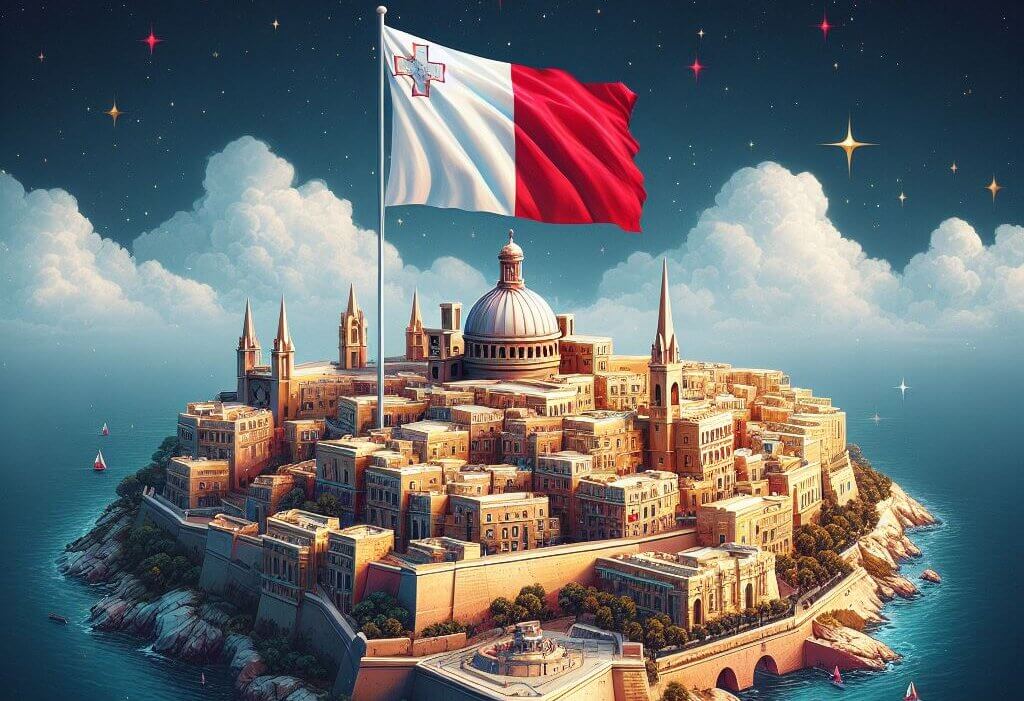
Although Malta is known for its magnificent scenery and lively nights in Paceville, the country has such a rich history that its vestiges still echo today.
But what is its true history? How did Arabic and English come to be part of Maltese culture?
So today we're sharing with you the key dates in Malta's history.
From prehistory to the Middle Ages
As early as prehistoric times, around 5200 BC, Malta saw the arrival of the first human presence. Fishermen straight from Sicily whose aim is to settle here and build a civilisation.
But it was around 800 BC that history began to change. Speaking of the Phoenicians, they briefly set up a colony here, since it was the Greeks who, a century later, founded their own settlement on the site where Mdina is today.
Malta took its name from the Latin Melita which means «refuge» and Mellita Greek for «bee». Over time, Malta came to be known as the Isle of Honey, and we still know it by that name today.
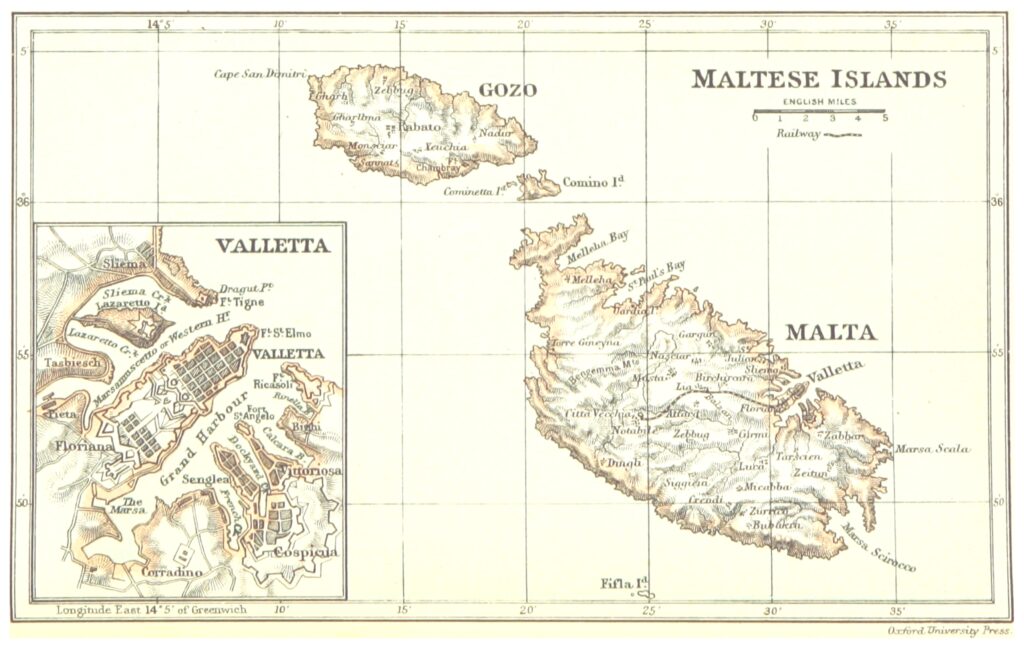
Hitherto a rather pacifist island, Malta came under the control of Carthage in 265 BC and became involved in the wars between Carthage and Rome, later known as the «Punic Wars». Malta then came under Roman control.
It was in the Middle Ages, after having been one of the main crossroads of the Mediterranean sea routes, Malta was eventually invaded by the Arabs.
Very quickly, the entire population converted to Islam. The culture of Malta then revolved around that of the Muslims, and they made Mdina the capital of the Honey Island.
Let's face it, this important occupation has left its mark on our society today.
And that is why the Maltese language still has very pronounced Arabic roots. In 1127, the Muslims were driven out by Sicilian rule and forced to leave the island. Although the population would return to Christianity, it still retained the Arabic language.
From the Renaissance to the modern era
During the Renaissance, Charles V, a German emperor and king of Spain, granted Malta to the Order of the Knights of St John of Jerusalem.
With the aim of building fortifications to defend the Christian religion against the Ottomans. This order would later be known as the Order of Malta.
It wasn't until 1565 that 40,000 Turkish troops landed on the island to protect it, with the aim of winning the battle against the Ottomans.
This is known as the battle of the Great Siege of Malta, on 13 September 1565. Between 1566 and 1571, Jean Parisot de La Valette, Grand Master of the Knights of the Order, built.., a new capital closer to the sea and will bear the famous name of Valletta.
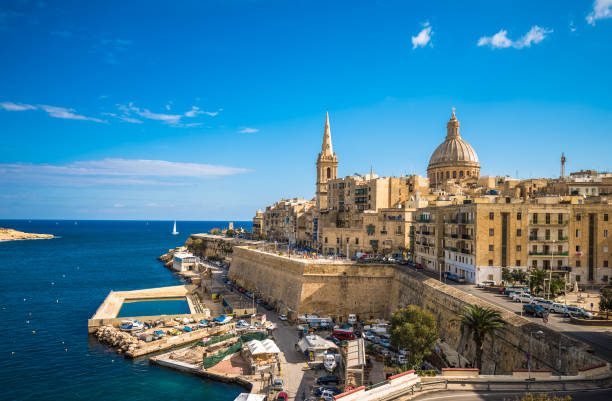
The Order lost its dominance in 1798 when Napoleon Bonaparte decided to invade the Maltese island. To fight against the latter, the population calls on the British in order to drive out the «post-revolution» French, who were questioning the whole Christian religion and its foundations. The French finally surrendered in 1800, taking refuge in Valletta.
Following this event, the British Empire took the opportunity to build a real colony on the island. But the inhabitants continued to demand their independence from the powers that be.
It would take the two World Wars for Malta to become fully independent on 21 September 1964 and join the Commonwealth. In 1974, the island became a Republic and got its first president, Anthony Mamo.
Finally, in 2004 and again in 2008 Malta is a member of the European Union and the euro zone.
The vestiges of a proclaimed independence
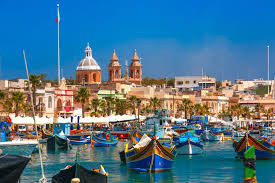
As well as the magnificent landscapes that the island has to offer, Malta's architecture is a combination of cultures that over the years has given rise to the island's emblematic style: the worst Maltese limestone, with its soft honey colour.
Furthermore, the languages spoken are all tied to its history. Today, they stand as guarantors of a proclaimed independence through its multiple conflicts among different civilizations.
Maltese, the country's national and official language, is a gentle blend of Arabic and Italian, the result of centuries of occupation.
But Malta and England share a particularly strong connection due to the long British colonization, and today it holds a prominent socio-political position. That is why English is now the second official language of the island of honey.